

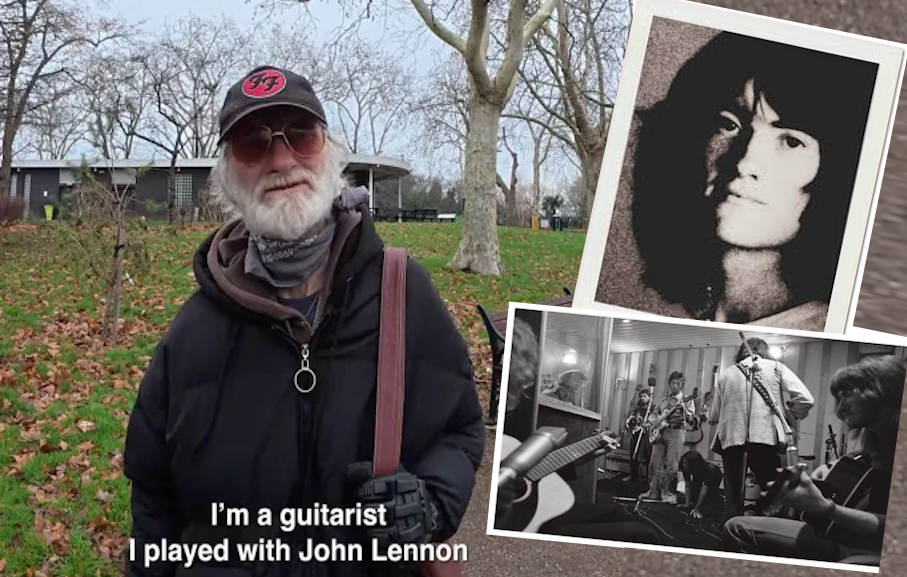
A chance encounter during a routine stroll through a London park was all it took for Rod Lynton to reignite interest in one of the most iconic eras of British rock. When the Muswell Hill resident was approached for a spontaneous interview by the A Mug of Life podcast, he didn’t just offer small talk; he provided a rare, firsthand account of his time contributing to John Lennon’s Imagine, a cornerstone of post-Beatles history. Now in his seventies, Lynton remains a captivating narrator of the 1960s music boom, though his humility is striking. When asked about his most significant memory involving a cup of tea, he famously pointed to the one Lennon brewed for him personally—a small, domestic gesture that underscores his incredible proximity to musical royalty.
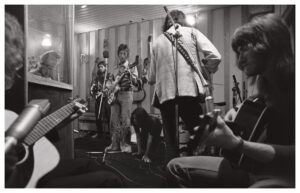
By the late 1960s, Lynton had established himself as a talented guitarist, gaining a foothold in the Beatles’ inner circle through a connection with manager Brian Epstein’s office. His reputation as a musician who could “really play” eventually reached Lennon himself. During a session where he was initially just a spectator, Lynton followed a gut instinct and picked up a nearby acoustic guitar.
This moment of initiative caught Lennon’s ear, leading to an immediate invitation to join the upcoming demo sessions. This casual transition from observer to collaborator saw Lynton playing a vital role in the 1971 masterpiece Imagine. Recorded between Lennon’s Tittenhurst Park estate and New York, the album replaced the raw minimalism of previous works with a lush, sophisticated sound guided by Yoko Ono and Phil Spector.
Lynton’s fingerprints are all over the record; he contributed to tracks like “Crippled Inside,” “Gimme Some Truth,” “How Do You Sleep,” and “Oh Yoko.”
Far from being a background player, he actively helped shape the arrangements alongside Lennon and Spector, working in a high-caliber environment that included George Harrison and Klaus Voormann. Beyond his work with John Lennon, Lynton’s career illustrates the tight-knit nature of the London scene—his only formal guitar lesson, for instance, came from Ray Davies of The Kinks. He was also a key figure in bands like Rupert’s People, whose work is cited as an influence on Procol Harum’s “A Whiter Shade of Pale.”
Despite his storied past, Lynton remains grounded by the values of creativity and openness instilled in him by his mother, a former actress and dancer. His later years were defined by his devotion to her care, blending his professional highs with a deeply personal sense of duty. While he still occasionally performs for the joy of the music, he avoids the spotlight, preferring to be known simply as Rod. Yet, for a man who helped craft the soundtrack of a generation alongside a global icon, the title of “legend” remains an inescapable part of his legacy.

🟠We invite you to visit our NEW Facebook Page FOLLOW US HERE:
WELCOME! FOLLOW US! VISIT US HERE:
www.beatlesmagazine.com
https://www.facebook.com/BEATLESMAGAZINE1/
https://beatlesmagazine.blogspot.com/
https://beatlesmagazinebootleg.blogspot.com/
https://beatlesmagazinevideo.blogspot.com/
https://www.instagram.com/beatlesmagazine/
https://x.com/BEATLESMAGAZINE
https://www.tiktok.com/@beatlesmagazine
https://www.threads.net/@beatlesmagazine
🟠BEATLES STORES (Associated with Amazon, Shipments Worldwide)→ HERE , HERE & HERE
#USA 🇺🇸: https://amzn.to/3417JGy
#UK 🇬🇧: https://amzn.to/3qVcsDy
#JAPAN 🇯🇵 : https://amzn.to/3FbWKsO
#GERMANY 🇩🇪: https://amzn.to/3r6s5IB
#FRANCE 🇫🇷: https://amzn.to/3ty8zaX
#SPAIN 🇪🇸: https://amzn.to/3qfiS1s
👉Visit us : https://linktr.ee/BEATLESMAGAZINE
