
The Beatles released their sprawling 1968 double LP—universally known as the “White Album“—amid growing rumors of internal friction. “Cry Baby Cry” is placed near the close of Side Four, right before the avant-garde sound collage “Revolution 9,” a folk-tinged track that carries a rich history of advertising slogans, Abbey Road walkouts, and one of the most famous hidden codas in rock music.
Although officially credited to the Lennon–McCartney songwriting partnership, “Cry Baby Cry” was primarily the creation of John Lennon. Early home demos confirm that John began sketching the melody in late 1967, prior to the band’s retreat to Rishikesh, India. In conversation with official Beatles biographer Hunter Davies, Lennon revealed that the song’s central refrain originated from an old commercial slogan: “Cry baby cry, make your mother buy.”
From that commercial seed, John wove a surreal tapestry of Victorian-style characters, including the King of Marigold, the Queen of Hearts, and a Duchess who is “always late for tea.” Musicologists and Beatles historians, among them Mark Lewisohn in The Complete Beatles Recording Sessions, have pointed out how Lennon drew structural and lyrical inspiration from the classic English nursery rhyme “Sing a Song of Sixpence,” subverting childhood innocence with a slightly melancholic, psychedelic edge. Despite its lasting charm among fans, Lennon dismissed the composition during his landmark 1980 Playboy interview with David Sheff, calling it “not one of mine” and “a piece of rubbish” he was glad to be rid of.
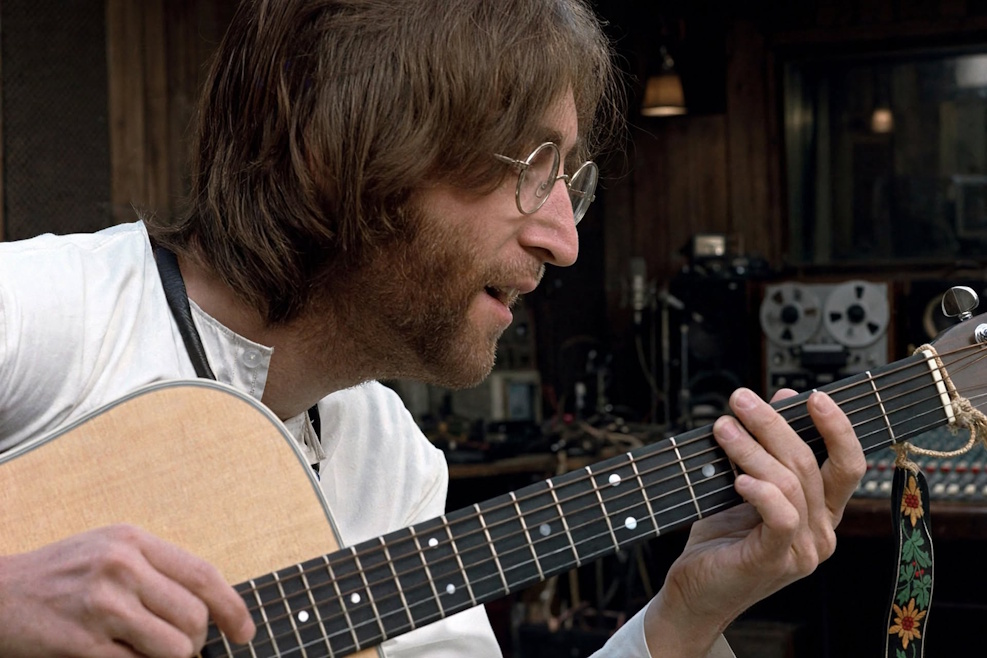
The July 1968 sessions for “Cry Baby Cry” at EMI Studios (now Abbey Road) took place during one of the most volatile chapters in the group’s history. Perfected after a full day of rehearsals on July 15, the basic rhythm track was recorded on July 16, featuring John Lennon on acoustic guitar and piano, Paul McCartney on bass, Ringo Starr on drums, and producer George Martin on harmonium.
However, the atmosphere inside Studio Two was thick with frustration. Perfectionist demands from Lennon and McCartney during simultaneous work on “Revolution” and “Ob-La-Di, Ob-La-Da” pushed audio engineer Geoff Emerick to his breaking point. In his 2006 memoir Here, There and Everywhere, Emerick recalled walking out of the “Cry Baby Cry” session mid-take, unable to stomach the growing hostility and arguments among the four members. Emerick refused to return to the Beatles’ control room for nine months, only rejoining them in April 1969 for “The Ballad of John and Yoko.”
Two days after Emerick’s departure, on July 18, the band returned with replacement engineers to complete the overdubs. They layered Lennon’s double-tracked lead vocals, eerie falsetto harmonies, tambourine, and tea-time sound effects. Most notably, George Harrison recorded his incisive lead guitar lines using “Lucy,” a cherry-red 1957 Gibson Les Paul Standard lent to him by Eric Clapton—a guitar Clapton would shortly gift permanently to Harrison, and which Harrison would later play on “While My Guitar Gently Weeps.”
The Eerie Mystery of “Can You Take Me Back?” As the final chords of “Cry Baby Cry” fade away, listeners are met not with silence, but with an evocative 28-second acoustic reprise in which Paul McCartney sings: “Can you take me back where I came from / Can you take me back?”
According to the Abbey Road session logs documented by Lewisohn, the snippet was a spontaneous blues improvisation recorded on September 16, 1968, during sessions for McCartney’s acoustic ballad “I Will,” with John on maracas and Ringo on bongos. For half a century, fans informally referred to this hidden piece by its opening lyric until Apple Corps officially legitimized the title “Can You Take Me Back? (Take 1)” on the 2018 50th Anniversary Super Deluxe reissue of The Beatles, which included the complete, unedited two-minute improvisation.
Over the decades, “Cry Baby Cry” has maintained a quiet, cult appreciation as essential connective tissue on the final side of the White Album. An early acoustic demo recorded at George Harrison’s Esher bungalow in May 1968 saw the light of day on the 1996 compilation Anthology 3, showcasing the song in its rawest, most stripped-down folk state. In 2018, on the occasion of the album’s 50th anniversary, The Independent ranked “Cry Baby Cry” at number 19 out of the LP’s 30 tracks, praising the seamless transition between Lennon’s rhyme-driven escapism and McCartney’s coda—something that perfectly encapsulates the unpredictable magic of The Beatles at the crossroads of their career.
According to music historian Ian MacDonald (Revolution in the Head) and EMI session archives:
“Cry Baby Cry”
John Lennon: Lead and harmony vocals, falsetto backing vocals, acoustic guitar, piano, Hammond organ
Paul McCartney: Electric bass, falsetto backing vocals
George Harrison: Lead guitar (1957 Gibson Les Paul “Lucy”)
Ringo Starr: Drums, tambourine
George Martin: Harmonium
“Can You Take Me Back?” (Coda)
Paul McCartney: Lead vocal, acoustic guitar
John Lennon: Percussion, maracas
Ringo Starr: Bongos
………………………………………………….
🟠Would you like to support the page with a donation? Enter HERE
 Join the Beatles Subscriber Zone here:

🟠We invite WELCOME! FOLLOW US! VISIT US HERE:
www.beatlesmagazine.com
https://www.facebook.com/BEATLESMAGAZINE1/
https://beatlesmagazine.blogspot.com/
https://beatlesmagazinebootleg.blogspot.com/
https://beatlesmagazinevideo.blogspot.com/
https://www.instagram.com/beatlesmagazine/
https://x.com/BEATLESMAGAZINE
https://www.tiktok.com/@beatlesmagazine
https://www.threads.net/@beatlesmagazine
🟠BEATLES STORES (Associated with Amazon, Shipments Worldwide)→ HERE , HERE & HERE
🟠VISIT PAUL McCARTNEY’s OFFICIAL AMAZON STORE: https://amzn.to/4r3DN4w
#USA 🇺🇸: https://amzn.to/3417JGy
#UK 🇬🇧: https://amzn.to/3qVcsDy
#JAPAN 🇯🇵 : https://amzn.to/3FbWKsO
#GERMANY 🇩🇪: https://amzn.to/3r6s5IB
#FRANCE 🇫🇷: https://amzn.to/3ty8zaX
#SPAIN 🇪🇸: https://amzn.to/3qfiS1s
👉Visit us : https://linktr.ee/BEATLESMAGAZINE
