

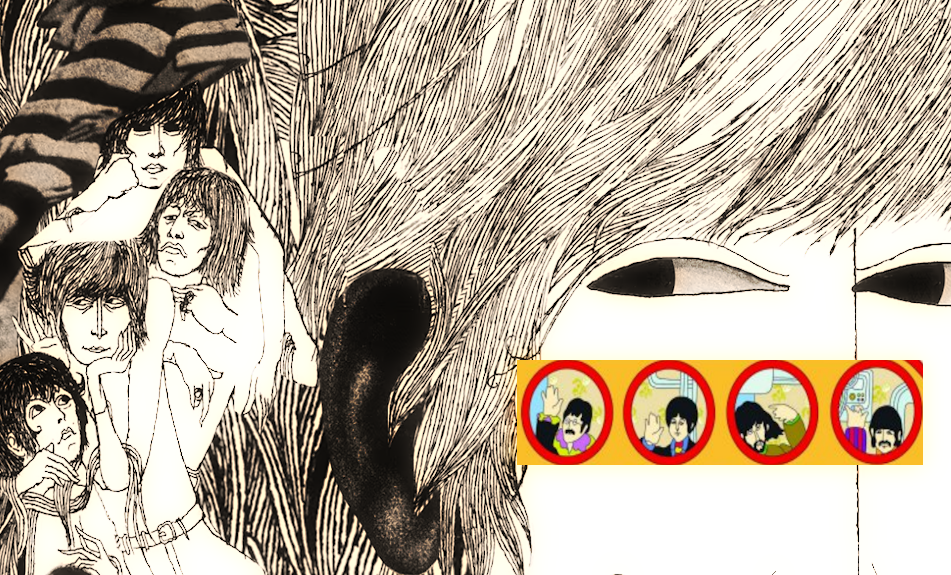
The reissue of Revolver: Special Edition, officially released on October 28, 2022, was an expanded edition—remixed by Giles Martin and Sam Okell—that included for the first time in official formats a wide selection of early takes, rehearsals, work tapes, and early studio versions (such as the early takes of “Tomorrow Never Knows,” “Got to Get You into My Life,” “And Your Bird Can Sing,” and “I’m Only Sleeping”).
Revolver: Special Edition (2022) gathered 28 archive tracks in its Sessions section (in the Super Deluxe and expanded digital editions, while the 2CD Deluxe edition includes a shorter selection). The material ranged from demos and songwriting tapes to outtakes and discarded mixes.
It included two standalone mono tracks of “Yellow Submarine“:
“Yellow Submarine” (Songwriting Work Tape, Pt. 1): 1:04 (1 minute and 4 seconds).
“Yellow Submarine” (Songwriting Work Tape, Pt. 2): 4:42 (4 minutes and 42 seconds).
The other versions of “Yellow Submarine” in Sessions (2022) were:
“Yellow Submarine” (Songwriting Work Tape, Pt. 1) — 1:04
“Yellow Submarine” (Songwriting Work Tape, Pt. 2) — 4:42
“Yellow Submarine” (Take 4 Before Sound Effects) — 2:37
“Yellow Submarine” (Highlighted Sound Effects)
Differences Between Songwriting Work Tape, Take 4 Before Sound Effects, and Highlighted Sound Effects
How do Songwriting Work Tape, Take 4 Before Sound Effects, and Highlighted Sound Effects of “Yellow Submarine” differ? The three recordings included in Sessions on Revolver: Special Edition (2022) document very different stages in the creation of “Yellow Submarine”: from the initial acoustic sketch of the composition to the final mix with its famous sound effects in the foreground.
1. Songwriting Work Tape (Parts 1 & 2) — The Compositional Origin
Home working tapes recorded before formal studio sessions, while the song was still being developed.
It is an intimate, stripped-back demo with John Lennon singing and accompanying himself on acoustic guitar (and Paul McCartney joining in the second part).
In Part 1 (1:04), the song has a slow, melancholic tone, with Lennon singing verses starting with “In the place where I was born…” in an introspective register, far removed from the festive final anthem. In Part 2 (4:42), you hear the rehearsal and adjustment process as the melody takes shape toward the final structure that Ringo Starr would later sing.
2. Take 4 Before Sound Effects — The Stripped-Back Studio Backing Track
The fourth take recorded at EMI Studios (Abbey Road) on May 26, 1966, before adding nautical and ambient sound-effect overdubs.
It presents the band playing the instrumental base (acoustic guitar, bass, drums, and tambourine) along with Ringo Starr’s lead vocal and group backing vocals, without the sonic collage that characterizes the album.
It lets you appreciate Ringo’s direct vocal performance and the clean rhythmic structure of the song without the distractions of bells, waves, chains, glasses, or the brass band.
3. Highlighted Sound Effects — The Mix with Effects in the Foreground
An alternative mix (originally released as a B-side on the “Real Love” single in 1996 and brought back in 2022) in which engineers pushed up the faders on the sound-effects track over the 1966 master.
It keeps the complete final recording, but with all the effects added on June 1, 1966 much louder and more audible than in the standard Revolver mix.
It lets you hear with complete clarity the party noises, clinking glasses, splashing water, chains, whistle, John Lennon’s voice shouting nautical commands (“Full speed ahead, Mr. Boatswain!”), and the brass band arrangements.
Lyrics in the Songwriting Work Tape and Changes in the Final Version
What do John Lennon’s lyrics actually say in Yellow Submarine (Songwriting Work Tape) and how did they change in the final version? In Yellow Submarine (Songwriting Work Tape), the song starts as a somber, melancholic acoustic sketch before transforming into the cheerful children’s story that reached the Revolver album in 1966.
What John Lennon sings on the work tape:
Part 1 (the melancholic verse): John Lennon sings alone with acoustic guitar about a feeling of abandonment and rootlessness in his birthplace. The opening line says:
“In the place where I was born / No one cared, no one cared” (The Beatles)
Lennon repeats variations of that idea—mentioning the place, the name, and the town he came from—always ending each verse with the refrain of indifference (“no one cared”).
Part 2 (the transition toward the submarine): With Paul McCartney taking part in the working session, both rehearse and adjust the melody until the final narrative structure emerges about the sailor telling his life in the land of submarines and the collective yellow submarine chorus (with small test variations in the phrasing before locking in the official lyrics).
How did Paul McCartney and John Lennon collaborate to write “Yellow Submarine” for Ringo Starr?
The collaboration between Paul McCartney and John Lennon to create “Yellow Submarine” combined a playful idea and catchy chorus from McCartney with the verse melody and initial melancholic approach from Lennon, all shaped so Ringo Starr would have a song tailored to him on Revolver (1966).
How creative work was divided
Paul McCartney’s spark and chorus: McCartney conceived the image of the yellow submarine as a light, almost childlike idea—emerging in that half-asleep state between sleep and waking—and composed the central chorus (“We all live in a yellow submarine…”), aiming to give Ringo an accessible, singable track.
John Lennon’s verse melody and sketch: Lennon already had his own verse outline—documented on the 2022 work tapes—with a slow, melancholic cadence starting from “In the town where I was born…”. Bringing both ideas together integrated Lennon’s verse melody with McCartney’s chorus and shifted it toward a bright narrative.
Lyrical tweaks and studio contributions: Both worked together to polish the verses and tone of the song (with occasional lyrical input, such as Donovan’s contribution on “Sky of blue and sea of green,” and Lennon’s shouts, commands, and studio banter).
Why It Was Intended for Ringo Starr
On Beatles albums it was common to save a vocal spot for Ringo Starr, but instead of relying on a cover or a low-ambition filler track, McCartney and Lennon developed a melody in a comfortable range with an easy-to-follow group chorus. The result worked so well that it not only made Revolver, but was released as a single (alongside “Eleanor Rigby”) and gave its title to the 1968 animated film, becoming the most iconic song sung by Ringo with the group.
Objects and Techniques Used for the Sound Effects
What objects and techniques did The Beatles and Geoff Emerick use to create the sound effects for “Yellow Submarine”? The overdub session on June 1, 1966 in Abbey Road’s Studio 2 turned “Yellow Submarine” into a festive, chaotic soundscape. Geoff Emerick, George Martin, and the band members combined household and studio props, EMI archive effect records, and tape techniques to build the underwater atmosphere and onboard party.
Everydat objects and Studio Props
Water, bubbles, and splashes: Containers of water and straws or tubes were used to make bubbles and liquid movement, recreating the watery setting around the song.
Glasses, tableware, and party atmosphere: Glasses and goblets clinking and chiming were used to simulate a toast and the bustle of a group celebration.
Chains and metallic noises: Chains and metal items were added to provide mechanical and maritime textures.
Discarded studio experiments: While developing ideas for the song, they also experimented with classic radio tricks—such as moving coal inside a cardboard box to imitate footsteps or marching—before settling on the elements that stayed in the final mix.
Effects Library, Brass Band, and Tape Techniques
EMI archive effect records: George Martin and Geoff Emerick turned to EMI’s sound-effects library to add nautical sounds (like waves and ship noises) and ambient overdubs onto the four-track tape.
Tape editing and splicing for the brass band: After “And the band begins to play,” instead of hiring a full band on short notice for a brief passage, they took brass-band and march recordings from the EMI archive (linked to pieces like Le Rêve Passé), cutting and splicing tape segments to assemble the festive interlude.
Echo chamber and theatrical voices: The group used the studio’s echo chamber to project shouts, exclamations, and maritime commands—such as the famous “Captain, Captain” or “Full speed ahead, Mr. Boatswain!”—that bring the submarine voyage to life.
Overdub mixing: All these elements were added over the backing recorded in May 1966, and in the 2022 reissue you can hear their true weight both in the official mix and on the Highlighted Sound Effects track, where the effects stand out in the foreground.
………………………………………………….
🟠Would you like to support the page with a donation? Enter HERE
 Join the Beatles Subscriber Zone here:

🟠We invite WELCOME! FOLLOW US! VISIT US HERE:
www.beatlesmagazine.com
https://www.facebook.com/BEATLESMAGAZINE1/
https://beatlesmagazine.blogspot.com/
https://beatlesmagazinebootleg.blogspot.com/
https://beatlesmagazinevideo.blogspot.com/
https://www.instagram.com/beatlesmagazine/
https://x.com/BEATLESMAGAZINE
https://www.tiktok.com/@beatlesmagazine
https://www.threads.net/@beatlesmagazine
🟠BEATLES STORES (Associated with Amazon, Shipments Worldwide)→ HERE , HERE & HERE
🟠VISIT PAUL McCARTNEY’s OFFICIAL AMAZON STORE: https://amzn.to/4r3DN4w
#USA 🇺🇸: https://amzn.to/3417JGy
#UK 🇬🇧: https://amzn.to/3qVcsDy
#JAPAN 🇯🇵 : https://amzn.to/3FbWKsO
#GERMANY 🇩🇪: https://amzn.to/3r6s5IB
#FRANCE 🇫🇷: https://amzn.to/3ty8zaX
#SPAIN 🇪🇸: https://amzn.to/3qfiS1s
👉Visit us : https://linktr.ee/BEATLESMAGAZINE
