
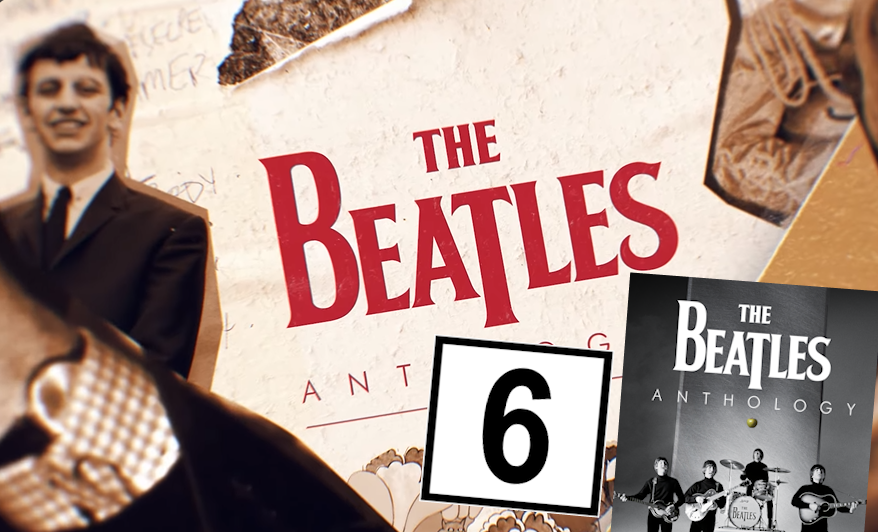
EPISODE SIX
Barely three years since their last show in a Hamburg club, The Beatles have achieved a level of fame, success and influence never seen before or since.
1966, meanwhile, is turning out to be a year full of worry and trouble. At his home in England, John is asked by the journalist Maureen Cleave about religion. His response, “we’re more popular than Jesus now…I don’t know which will go first: rock ’n’ roll or Christianity,” barely registers in his home country, but on the eve of yet another American tour, the USA sees a huge burst of noise, protest and hints of violent retribution, not least in the South’s Bible Belt.
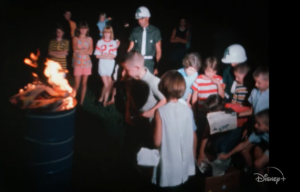
Even before this latest controversy, there has been a rising sense of anxiety around their live shows.
“Some people would let off firecrackers in the hall, and you’d think some of the others had got shot,” says George.
Even in 1965, he continues, his instinct was to call time on touring, and Ringo and John seemed to increasingly feel the same way. Paul thought differently, but even his mind has now been changed. “I’d been trying to say, ‘Ah no, touring’s good and it keeps us sharp… musicians need to play,’” he says. “But finally, I agreed with them.”
Their last show in front of paying audience happens at Candlestick Park in San Francisco on August 29, 1966. For all four, there is now a break from Beatledom. John films his role as Private Gripweed in the Richard Lester movie, “How I Won The War.” Paul works with George Martin on the award-winning score for the British film “The Family Way.” George spends around six weeks in India, furthering his affinity with its deep spirituality. Ringo finally gets to spend time with his new family.
When they regroup at the end of the year, everything feels different. There are moustaches on their upper lips, their hair has changed, and the music is in the midst of another transformation.
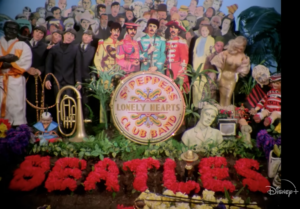
Paul’s “Penny Lane” and John’s “Strawberry Fields Forever”—whose accompanying short films are here in full—look back at their Liverpool childhoods through a surreal lens, and herald an even more dazzling level of creativity, captured in a new idea dreamt up by Paul: The Beatles taking on a fictional identity, presenting their next album the form of a show, and then, instead of touring, sending it round the world.
The innovations and experiments of “Sgt Pepper’s Lonely Hearts Club Band” mean long hours in the studio. But the work reaps rewards, not least on what will turn out to be the album’s closing track: the John/Paul co-write “A Day In The Life,” whose genesis is traced by George Martin. He plays the first-run through from the original tape, and marvels at John’s performance: “Even on this early take, he has a voice that sends shivers up your spine.”
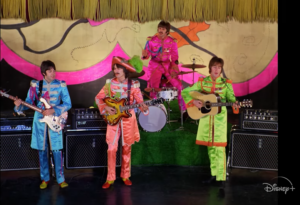
“Sgt Pepper” marks a global moment; Paul knows its significance when he watches Jimi Hendrix begin a London show with its title track, only three days after its release. Then Brian Epstein visits the studio with news that amounts to an ultimatum, centred on the first global satellite broadcast, which will be watched by 200 million people.
“We are to represent Britain in this round-the-world hook-up, and you’ve got to write a song,” he says. John comes up with “All You Need Is Love,” and The Beatles play to the planet, in the company of a crowd of their contemporaries. Compared to the cold and hostile mood of the previous year, everything seems to have aligned beautifully. “It was a fabulous time, musically and spiritually,” says Ringo.

🟠We invite you to visit our NEW Facebook Page FOLLOW US HERE:
WELCOME! FOLLOW US! VISIT US HERE:
www.beatlesmagazine.com
https://www.facebook.com/BEATLESMAGAZINE1/
https://beatlesmagazine.blogspot.com/
https://beatlesmagazinebootleg.blogspot.com/
https://beatlesmagazinevideo.blogspot.com/
https://www.instagram.com/beatlesmagazine/
https://x.com/BEATLESMAGAZINE
https://www.tiktok.com/@beatlesmagazine
https://www.threads.net/@beatlesmagazine
🟠BEATLES STORES (Associated with Amazon, Shipments Worldwide)→ HERE , HERE & HERE
#USA 🇺🇸: https://amzn.to/3417JGy
#UK 🇬🇧: https://amzn.to/3qVcsDy
#JAPAN 🇯🇵 : https://amzn.to/3FbWKsO
#GERMANY 🇩🇪: https://amzn.to/3r6s5IB
#FRANCE 🇫🇷: https://amzn.to/3ty8zaX
#SPAIN 🇪🇸: https://amzn.to/3qfiS1s
👉Visit us : https://linktr.ee/BEATLESMAGAZINE
