
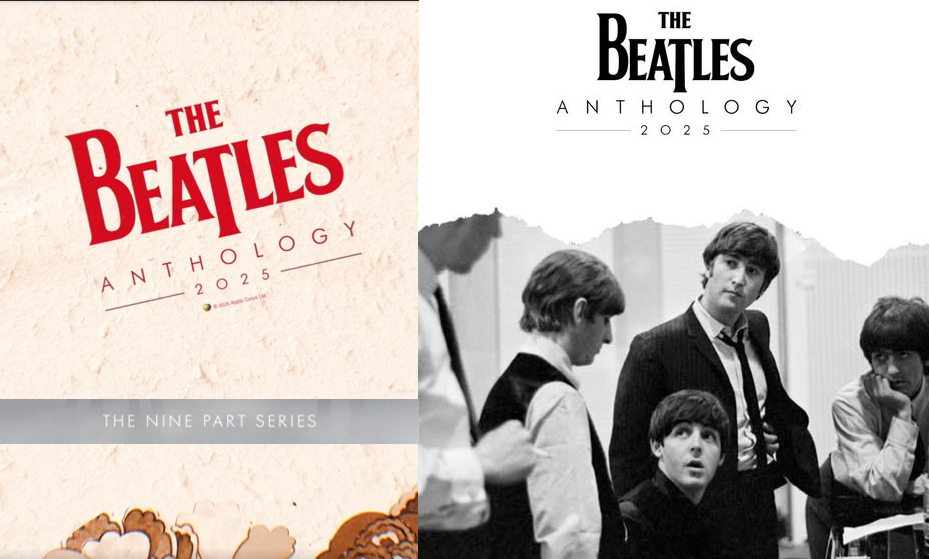
The new edition of the Anthology, despite having been reduced in chapter length, has given us a very interesting edition where material not included in the first version is added. Many details that were not previously considered are now protagonists in the re-edited Anthology. The quality of the audio and video totally surpasses what they offered us before. New scenes, new photographs, compositions, and arrangements are added, and the sound is truly impressive. The series continues tonight with Chapters 4, 5, and 6 on Disney+.
The ultimate version of the “Anthology” project was created with new generations of viewers and listeners in mind. Apple Corps’ UK-based production team took the original eight long form episodes and cut each episode down to just short of 60 minutes, resulting in a stronger narrative. All the postproduction—online, picture and sound restoration, sound mix and grade—was completed at Park Road Post in New Zealand, the company owned by Peter Jackson, who worked such magic with the three-part “Get Back” series. Giles Martin, who has been working on The Beatles’ music for twenty years, has provided up-to-date audio mixes for the majority of the music featured throughout the series.
Episode One of the “Anthology” series begins in 1940s Liverpool, moves on to The Beatles’ amazing
formative period in Hamburg, and reaches its end when, in the midst of a freezing winter, “Please Please Me” reaches the top of the UK singles charts, then move through the British birth of Beatlemania, and their sudden conquest of America in early 1964. Not long after, the arrival in their lives of new illicit forms of stimulation point to the artistic break throughs of “Rubber Soul” and “Revolver.” Woven through all this are profoundly human aspects of the story: not least, their unbelievably close four-way bond, and the hugely important role played by their manager Brian Epstein.
The creative feats of 1966 run alongside an undercurrent of fear and violence, epitomised in episodes five and six by their treatment by the dictator of the Philippines and the furor in the American Deep South over John’s “bigger than Jesus” quote, when the story contains both bitter resentment, and The Beatles’ very real fears for their safety. In that context, what comes soon after almost beggars belief: they begin work on the unprecedentedly creative “Sgt Pepper,” after which came Epstein’s shocking passing, Magical Mystery Tour, and the time they spent in India, where they wrote most of the material that would appear on the so-called “White Album.”
As their company Apple rises and then falls, The Beatles begin the two-year passage towards their
break-up, when the reality they have to deal with starts to darken, and they experience the
establishment revenge manifested in harassment and drug busts. But to the end, through the creation of “Let It Be” and “Abbey Road,” “Anthology” shows that they held on to the way of thinking (and being) that defined them, summed up in one of the last pieces of music they recorded: “And in the end/The love you take/Is equal to the love you make.”
All this—and much more—is remembered with insight, humour and an occasional sense of amazement at what The Beatles created and catalysed. In an age when social media has played a key role in making public figures wary of being honest and outspoken, there is a brilliantly bracing quality to what the four of them say in archive footage, and much of what they remember as they look back. But that was always one of their key qualities. “We were always very true to ourselves,” said Paul. “And I think that brutal honesty The Beatles had was important…sticking to our own guns and really saying what we thought in some way gave other people in the world the idea that they too could be truthful.”
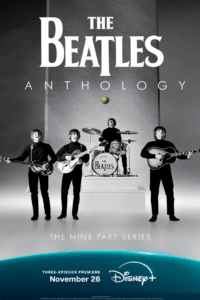
There is a new episode—Episode Nine—that serves as a coda. It centres on footage of Paul, George and Ringo meeting up again in the 1990s, sitting for joint interviews about their time together, playing music together and listening to Beatles songs in the company of George Martin. They also talk about another aspect of Anthology’s inherent authenticity: the fact that it presents its story complete with complexity and contradictions.
“We started off trying to make the definitive story of The Beatles,” said Paul. “And we ended up realising that it’s almost impossible to get the definitive story, because people look at things from different points of view.” He later put the same point in a different way: “That’s how life really is. You live this dream that there’s a definitive version, and there isn’t.”
“Everybody sees life as it’s happening through their own eyes,” said George. “And when you get a situation like The Beatles’ story, everybody had their own idea of what happened.” Because “Anthology” recognises that basic truth, it honours the kaleidoscopic, multi-faceted nature of The Beatles’ lives: with experiences as surreal and often unexpected as these, how could there be one single take on what transpired?
The “White Album” is remembered by George as a record on which “there was a lot more individual
stuff,” whereas Ringo says “we ended up being more of a band again.” Exactly what happened when
they met Elvis Presley in the summer of 1965 is a matter of contention (although George clearly recalls asking his entourage “if anybody had any reefer”). The sessions that gave rise to “Let It Be” and the movie of the same name—since explored in the “Get Back” films—were simultaneously scattered with tension and good humour, and different voices emphasise those different aspects.
Thanks to this approach, we get the whole story. Each episode begins with the same visual sequence: four black-and-white Beatles performing “Help!” at the foot of a band logo that becomes bigger and bigger, to the point that John, Paul, George and Ringo recede into invisibility. This symbolises what actually happened while The Beatles were together and for years afterwards: a great mountain of acclaim, myth and controversy obscuring any clear sense of what the four of them had been through. In that sense, “Anthology” restores enough raw humanity to everything to make it feel completely authentic. And its new form, that aspect of the project becomes even clearer.
What really burns through the “Anthology” series is the feeling of people living their lives at four or five times the normal speed, even for successful musicians. As against how modern musical careers tend to work, there are no four-year gaps between albums or mutually agreed hiatuses and lengthy solo projects: the amount of intrigue and excitement in each episode proves that The Beatles’ sheer velocity sometimes seemed almost supernatural.
The world around them evolved quickly too, partly because of their influence. In 2025, do we really feel that far from 2019? 1969, by contrast, feels like another world relative to 1963, and the cultural changes The Beatles inaugurated were a big part of the reason why. “We were all in this ship in the ’60s…a ship going to discover the New World,” said John, in a quote included in “Anthology’s” accompanying book, published in 2000. “And The Beatles were in the crow’s nest…We were going through the changes, and all we were saying was, ‘It’s raining up here!’ or ‘There’s land!’ or ‘There’s sun!’ We were just reporting on what was happening to us.”
The story “Anthology” tells is also about something much more emotional: the almost unbelievable connection between these four people. “They became the closest friends I’d ever had,” said Ringo. “I was an only child and suddenly I felt as though I’d got three brothers. We really looked out for each other.”
At the end of episode eight, he talks about the same thing, in one of Anthology’s most moving scenes. “It was magical,” he says. “Some really loving, caring moments, between four people. A really amazing closeness. That four guys really loved each other was pretty sensational.” “I’ve read cracks about, ‘Oh, The Beatles sang ‘All You Need Is Love,’ but it didn’t work for them,” says John. “But nothing’ll ever break the love we have for each other.” “I’m really glad that most of the songs dealt with love, peace, understanding,” says Paul. “They really did. If you look back, there’s hardly any one [that] says, ‘Go on kind, tell ’em all to sod off, leave your parents.’ It’s all very ‘All You Need Is Love,’ John’s ‘Give Peace A Chance’—a very good spirit behind it all.”
We are a long way from when The Beatles finally broke up, but the new Anthology shows that their journey is still going on as their story carries on unfolding, in often unexpected ways. Because this is an era when technology ensures the musical past is as accessible as the present, one is often almost indistinguishable from another. And so, the wonder of their history endures in ways they saw coming. “The Beatles will go on and on—on those records and films and videos and books and whatever, and in people’s minds,” George said as “Anthology” took shape. “And The Beatles, I think, exist without us.”
The reasons for that endless afterlife are what defines just about every Anthology moment, and what this series tells us, not just about The Beatles’ music, but the incredible period they moved through together. Nothing like that had ever been experienced by four people in such a short space of time. It still remains utterly unique. And complete with honesty, insight and masterful storytelling, it’s all here.
©Apple Corps Ltd.
🟠Would you like to support the page with a donation? Enter HERE
🟠We invite you to visit our NEW Facebook Page FOLLOW US HERE:
WELCOME! FOLLOW US! VISIT US HERE:
www.beatlesmagazine.com
https://www.facebook.com/BEATLESMAGAZINE1/
https://beatlesmagazine.blogspot.com/
https://beatlesmagazinebootleg.blogspot.com/
https://beatlesmagazinevideo.blogspot.com/
https://www.instagram.com/beatlesmagazine/
https://x.com/BEATLESMAGAZINE
https://www.tiktok.com/@beatlesmagazine
https://www.threads.net/@beatlesmagazine
🟠BEATLES STORES (Associated with Amazon, Shipments Worldwide)→ HERE , HERE & HERE
#USA 🇺🇸: https://amzn.to/3417JGy
#UK 🇬🇧: https://amzn.to/3qVcsDy
#JAPAN 🇯🇵 : https://amzn.to/3FbWKsO
#GERMANY 🇩🇪: https://amzn.to/3r6s5IB
#FRANCE 🇫🇷: https://amzn.to/3ty8zaX
#SPAIN 🇪🇸: https://amzn.to/3qfiS1s
👉Visit us : https://linktr.ee/BEATLESMAGAZINE
