
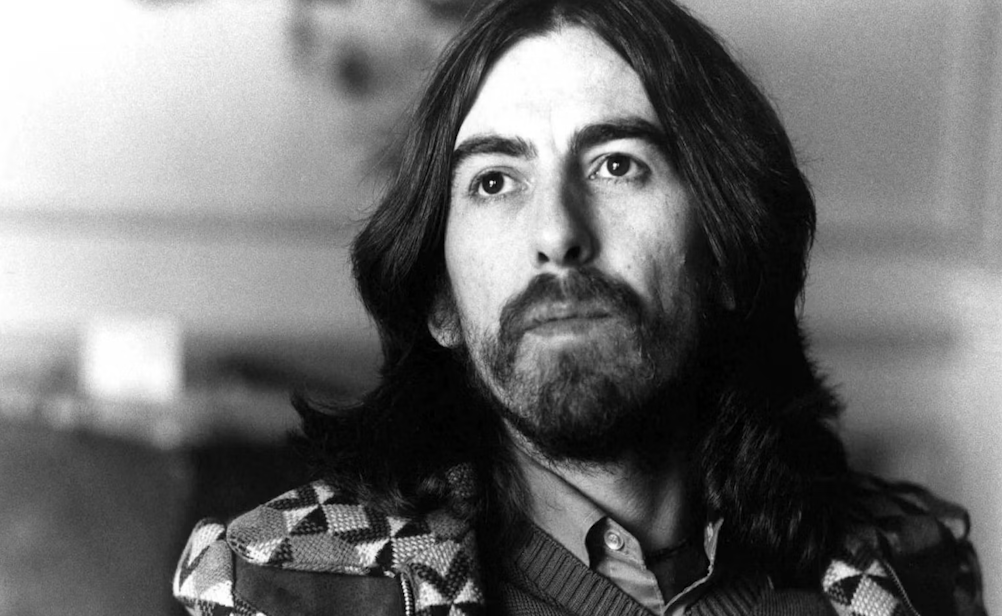
Featured as the final track on his 1976 album Thirty Three & 1/3, “Learning How to Love You” marked George Harrison’s first release under his own Dark Horse label. Harrison originally composed the piece for Herb Alpert—the famed musician and co-founder of A&M Records—during a period when A&M served as Dark Horse’s global distributor. Despite a legal falling out caused by Harrison missing his delivery deadlines (which eventually forced him to move his distribution to Warner Bros.), he maintained a sense of professional grace by keeping the song’s dedication to Alpert in the official liner notes.
Musically, the track is often cited for its sophisticated blend of light jazz and soul, drawing comparisons to the melodic style of Burt Bacharach. Harrison held the composition in high regard, personally viewing it as his finest songwriting achievement since the Beatles‘ classic “Something.” The recording is defined by Richard Tee’s smooth Fender Rhodes piano and a lush arrangement of horns and flutes by Tom Scott, and it gained further visibility as the B-side for both the “Crackerbox Palace” and “This Song” singles.
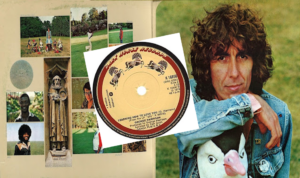
In his 1980 memoir, I, Me, Mine, Harrison mentions his fondness for Alpert’s vocal style, particularly noting the influence of “This Guy’s in Love with You” and so “thought I’d try and write a vocal [piece], something with that sort of mood”.
According to authors Chip Madinger and Mark Easter, Harrison’s working title for the new composition was “Herb’s Tune”.
In the 2002 foreword to I, Me, Mine, Olivia Harrison points out that the original lyrics for “Learning How to Love You”—shown in the book on a scanned airmail envelope—were actually written down in her own hand: “I wrote the first line of lyrics down for him as he was working out the melody,” she writes. “Then he took the pen from my hand and wrote words that would later guide him back to the thoughts he wanted to express.”
These lines became the first verse of what author Alan Clayson describes as a “discreetly jazzy” song about “unconditional spiritual love”
Musicians on the track:
George Harrison – vocals, electric guitar, acoustic guitar, claves, triangle, backing vocals
Richard Tee – electric piano
David Foster – organ
Tom Scott – saxophones, flutes, brass, string and woodwind arrangements
Willie Weeks – bass
Alvin Taylor – drums

🟠We invite WELCOME! FOLLOW US! VISIT US HERE:
www.beatlesmagazine.com
https://www.facebook.com/BEATLESMAGAZINE1/
https://beatlesmagazine.blogspot.com/
https://beatlesmagazinebootleg.blogspot.com/
https://beatlesmagazinevideo.blogspot.com/
https://www.instagram.com/beatlesmagazine/
https://x.com/BEATLESMAGAZINE
https://www.tiktok.com/@beatlesmagazine
https://www.threads.net/@beatlesmagazine
🟠BEATLES STORES (Associated with Amazon, Shipments Worldwide)→ HERE , HERE & HERE
🟠VISIT PAUL McCARTNEY’s OFFICIAL AMAZON STORE: https://amzn.to/4r3DN4w
#USA 🇺🇸: https://amzn.to/3417JGy
#UK 🇬🇧: https://amzn.to/3qVcsDy
#JAPAN 🇯🇵 : https://amzn.to/3FbWKsO
#GERMANY 🇩🇪: https://amzn.to/3r6s5IB
#FRANCE 🇫🇷: https://amzn.to/3ty8zaX
#SPAIN 🇪🇸: https://amzn.to/3qfiS1s
👉Visit us : https://linktr.ee/BEATLESMAGAZINE
