


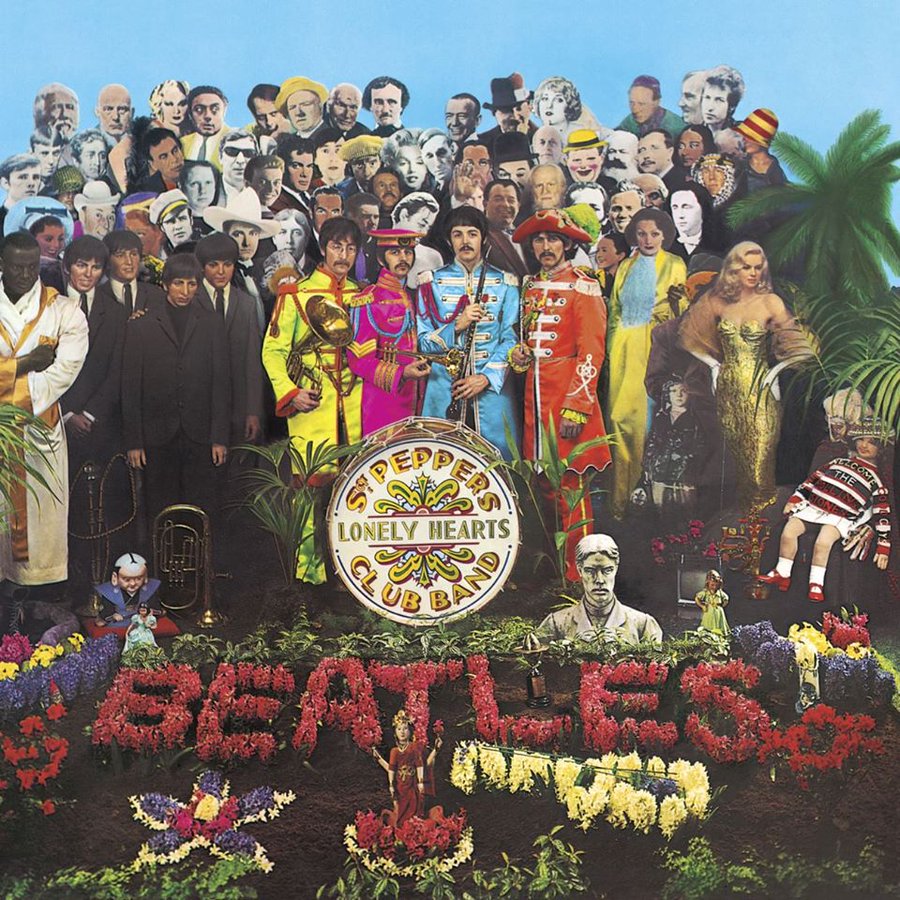
Few images in music history have sparked as much debate, analysis, and sheer curiosity as the cover of Sgt. Pepper’s Lonely Hearts Club Band. While millions have gazed upon this vibrant collage since 1967, the question of “who exactly is there?” remains a point of contention among fans and historians alike. Depending on who you ask, the count fluctuates wildly—some claim there are 60, others over 70. But why does the number vary so much?
The confusion arises from the very nature of the artwork: Peter Blake and Jann Haworth didn’t just photograph people; they created a surreal assemblage that mixed living legends, waxwork figures from Madame Tussauds, hand-painted cutouts, and symbolic religious objects. When you account for the blurring line between human figures, wax dummies, and inanimate items, the census becomes a complex puzzle.
For the true enthusiast, however, clarity is key. We have cut through the myth and speculation. By cross-referencing the official archives and Peter Blake’s own documentation, we have compiled the definitive list of the 57 primary human figures that stand alongside the Fab Four. Join us as we strip away the ambiguity and profile the iconic individuals who compose the most famous crowd in rock and roll.
This is the final list of the 57 characters (excluding the Beatles themselves) present in the original collage.
Sri Yukteswar Giri: Indian yoga master and author of The Holy Science. He played a pivotal role in introducing Eastern philosophy to the West, deeply influencing George Harrison’s spiritual journey.
Aleister Crowley: British occultist and writer known for founding the philosophy of Thelema. He was one of the most controversial figures of the 20th century, whose fascination with mysticism greatly intrigued John Lennon.
Mae West: Legendary American actress and playwright, famous for her biting wit and defiant attitude toward censorship. She was an icon of female independence and sexual liberation during Hollywood’s Golden Age.
Lenny Bruce: American satirical comedian who revolutionized stand-up with raw, critical humor. His battles against censorship and his biting social commentary made him a martyr for freedom of expression.
Karlheinz Stockhausen: German composer and pioneer of electronic and avant-garde music. His experimental approach to sound manipulation was a direct influence on the studio experiments the Beatles conducted.
W. C. Fields: American actor and comedian, celebrated for his character as a cynical, hard-drinking misanthrope. His dry wit and aversion to social conventions made him a favorite among the band members.
Carl Jung: Swiss psychiatrist and psychoanalyst who founded analytical psychology. His theories regarding the collective unconscious and archetypes influenced the intellectual atmosphere of the era and the Beatles’ inner exploration.
Edgar Allan Poe: American writer and poet, master of the horror story and gothic mystery. His influence on modern literature and his ability to explore human darkness earned him a cult status worldwide.
Fred Astaire: American actor, dancer, and choreographer, the emblem of elegance in Hollywood. His perfectionism and technical skill in musicals defined the standard of excellence for mass entertainment in his time.
Richard Merkin: American painter and illustrator known for his retro-styled figurative work. He was a highly respected figure in the New York art scene during the 1960s, contributing to the pop art movement.
“The Vargas Girl”: Classic illustration created by artist Alberto Vargas, an icon of American pin-up art. She represents the aesthetic ideal of mid-century American visual culture, admired for her artistic sensuality.
Huntz Hall: American actor remembered primarily for his roles in The Bowery Boys film series. He was a popular figure in classic comedy, bringing a gritty, neighborhood-cinema feel to the album’s composition.
Simon Rodia: Italian immigrant and self-taught builder of the famous Watts Towers in Los Angeles. His architectural work stands as a testament to visionary creativity and individual effort within an urban environment.
Bob Dylan: American poet, singer, and songwriter, a fundamental pillar of 20th-century popular music. His shift to electric folk and his profound lyrics were the catalyst that pushed the Beatles toward deeper songwriting.
Aubrey Beardsley: British illustrator of the Art Nouveau movement, famous for his detailed black-and-white ink drawings. His decadent and provocative style was an aesthetic pillar at the end of the 19th century.
Sir Robert Peel: Prominent 19th-century British politician who founded the modern police force, known as the “Bobbies.” His legacy in public administration and his role as Prime Minister made him a historical pillar.
Aldous Huxley: British writer and philosopher, author of Brave New World and The Doors of Perception. His explorations of dystopian futures and psychedelic experiences were fundamental to the 1960s counterculture.
Dylan Thomas: Welsh poet and writer known for his lyrical style and turbulent personal life. He remains one of the most intense voices of 20th-century poetry, admired for his verbal musicality and rhythm.
Terry Southern: American screenwriter and satirist, famous for his acid humor in works like Dr. Strangelove. His connection to the underground scene and his sharp writing style influenced the Beatles’ creative outlook.
Dion DiMucci: American rock and roll and doo-wop singer, a teenage idol of the late 1950s. His music represented the transition between upbeat pop and a more serious, soulful musical sensibility.
Tony Curtis: Versatile American actor famous for roles in classics like Some Like It Hot. He was a central figure in Hollywood, embodying the charisma and glamour of the silver screen era.
Wallace Berman: American plastic artist and pioneer of the assemblage movement and experimental visual culture. His work is recognized for the use of collages that carried a strong political and aesthetic charge.
Tommy Handley: British radio comedian of the 1940s who was immensely popular during World War II. His quick wit and satirical style were a constant reference point for British culture in the postwar years.
Marilyn Monroe: Absolute icon of cinema and sex symbol of the 1950s. Beyond her media image, she was a complex, tragic figure whose presence on the cover represents the fleeting and powerful nature of fame.
William S. Burroughs: American novelist, key figure of the Beat Generation and author of Naked Lunch. His avant-garde literary techniques and visceral view of reality deeply influenced the era’s counterculture.
Sri Mahavatar Babaji: Indian master and guru revered for his legendary longevity and spiritual power. His inclusion reflects the immense fascination the Beatles had with the mysticism and wisdom of India.
Stan Laurel: Half of the legendary comedy duo Laurel and Hardy. As the “thin” one, his subtle style and genius for creative physical comedy defined a huge part of the history of slapstick humor.
Richard Lindner: German-American painter known for his portraits featuring mechanical forms and saturated colors. His work explored urban life and sexuality, resonating with the pop art style of the 1960s.
Oliver Hardy: The counterpart to Stan Laurel in the Laurel and Hardy comedy duo. His charisma and his uncanny ability to convey utter frustration with a single glance made him a genius of comedic acting.
Karl Marx: German philosopher and political theorist who transformed modern social and economic thought. His inclusion is one of the most striking, symbolizing political agitation and a global shift in paradigms.
H. G. Wells: British writer, pioneer of science fiction with works like The War of the Worlds. His vision regarding the future, technology, and human progress was fundamental to shaping modern culture.
Sri Paramahansa Yogananda: Indian guru who introduced meditation and yoga techniques to the West through his classic Autobiography of a Yogi. His philosophy served as a spiritual compass for George Harrison.
James Joyce: Irish writer and author of Ulysses, considered one of the pillars of 20th-century literature. His experimentation with stream-of-consciousness was a key influence on the creative writing of the era.
Stuart Sutcliffe: The “original Beatle” and bassist of the group during their early years in Hamburg. He was a talented painter whose premature death left a deep emotional mark on John Lennon.
Max Miller: British comedian known for his quick wit and direct style in the traditional music hall. He was one of the major influences on British humor that would later inspire the band members.
A “Petty Girl”: Artwork by illustrator George Petty, which, like Vargas, defined the aesthetic of the idealized woman of the era. These images were a cornerstone of the pop iconography the Beatles celebrated.
Marlon Brando: Revolutionary actor who introduced naturalistic method acting to cinema. His image as a rebel with a cause made him the definitive symbol of the non-conformist youth of his generation.
Tom Mix: American actor and the first great star of the western genre in silent film. His action-packed movies and adventurous lifestyle embodied the myth of the American Old West for millions.
Oscar Wilde: Irish playwright and poet known for his sharp wit and his fight for individual freedom. His aestheticism and defense of “art for art’s sake” marked a turning point in cultural history.
Tyrone Power: American actor highly popular in the 1930s and 40s, known for his adventurous hero roles. His physical attractiveness and dramatic talent positioned him as a top-tier Hollywood star for decades.
Larry Bell: American sculptor and minimalist artist known for his glass cube installations. He represented the interest of artists of the time in exploring light, physical space, and human perception.
David Livingstone: Scottish explorer and missionary who mapped large parts of Africa for the Western world. His life, dedicated to adventure and scientific discovery, made him a legendary figure in British history.
Johnny Weissmuller: Olympic swimmer who won five gold medals and later became famous for playing Tarzan. He was the ultimate symbol of athletic vigor and strength brought to the big screen.
Stephen Crane: American writer and author of The Red Badge of Courage. He is recognized as one of the fathers of literary realism in America, highly analyzed and admired by critics and writers.
Issy Bonn: British comedian, singer, and actor of Jewish descent, famous on the vaudeville stage. He was highly respected for his ability to connect with the audience and his natural stage charisma.
George Bernard Shaw: Irish playwright, Nobel laureate, and a brilliant social critic. His ability to use humor as a weapon against social injustices was an important ideological influence on the band.
H. C. Westermann: American sculptor known for his wooden artworks with surrealist and satirical undertones. His artisanal approach and peculiar vision of the world captivated the pop artists of the time.
Albert Stubbins: English footballer who played for Liverpool FC, being John Lennon’s favorite player. His inclusion is a personal touch from Lennon, paying homage to his roots in the city of Liverpool.
Sri Lahiri Mahasaya: Indian Kriya Yoga master, a central figure in Yogananda’s lineage of teachers. He represents the deep connection to Indian spirituality that the band sought to integrate into their lives.
Lewis Carroll: British writer and mathematician, author of Alice’s Adventures in Wonderland. His overflowing imagination and play with logic and language were a direct influence on the band’s psychedelic lyrics.
T. E. Lawrence: Known as “Lawrence of Arabia,” he was a British officer, explorer, and writer. His adventurous life and his role in the Arab Revolt made him a romantic hero of the 20th century.
Sonny Liston: American heavyweight boxing champion who became an iconic sports figure in the 1960s. His presence on the cover reflects the band’s interest in the cultural power of contemporary sports heroes.
Diana Dors: British actress who was a major cultural icon in the UK during the 1950s and 60s. She was known for her glamorous screen presence and her ability to navigate the fame of the time.
Shirley Temple: Child star of the 1930s who became the most famous youth icon in cinema history. Her inclusion serves as a nostalgic reference to the innocence of the early days of global media.
Albert Einstein: Theoretical physicist who developed the theory of relativity, changing our understanding of the universe. His inclusion celebrates the human intellect and the scientific curiosity that defined the era’s progress.
Bette Davis: Distinguished American actress known for her strong screen presence and emotional intensity. She was one of the most respected performers of her time, representing the height of dramatic excellence.
Various Wax Figures/Objects: Includes anonymous wax dummies and religious objects like the goddess Lakshmi. These served to fill the space and create the surreal, funeral-like atmosphere requested by the Beatles for the cover.
Note: The number of characters can vary depending on whether one counts specific inanimate objects or partial figures; however, this list represents the 57 primary human figures identified in the official records.
The list into rows, always reading from left to right and top to bottom. Here is the summary structured that way:
Row 1 (Top)
Sri Yukteswar Giri | 2. Aleister Crowley | 3. Mae West | 4. Lenny Bruce | 5. Karlheinz Stockhausen | 6. W. C. Fields | 7. Carl Jung | 8. Edgar Allan Poe | 9. Fred Astaire | 10. Richard Merkin | 11. “The Vargas Girl” | 12. Huntz Hall | 13. Simon Rodia | 14. Bob Dylan | 15. Aubrey Beardsley.
Row 2 (Middle)
Sir Robert Peel | 17. Aldous Huxley | 18. Dylan Thomas | 19. Terry Southern | 20. Dion DiMucci | 21. Tony Curtis | 22. Wallace Berman | 23. Tommy Handley | 24. Marilyn Monroe | 25. William S. Burroughs | 26. Sri Mahavatar Babaji | 27. Stan Laurel | 28. Richard Lindner | 29. Oliver Hardy | 30. Karl Marx | 31. H. G. Wells | 32. Sri Paramahansa Yogananda | 33. James Joyce | 34. Stuart Sutcliffe | 35. Max Miller.
Row 3 (Bottom)
A “Petty Girl” | 37. Marlon Brando | 38. Tom Mix | 39. Oscar Wilde | 40. Tyrone Power | 41. Larry Bell | 42. David Livingstone | 43. Johnny Weissmuller | 44. Stephen Crane | 45. Issy Bonn | 46. George Bernard Shaw | 47. H. C. Westermann | 48. Albert Stubbins | 49. Sri Lahiri Mahasaya | 50. Lewis Carroll | 51. T. E. Lawrence.
Row 4 (Frontal and Wax Figures)
Sonny Liston | 53. Diana Dors | 54. Shirley Temple | 55. Albert Einstein | 56. Bette Davis | 57. Others (Mannequins and objects).
……………………………………………………
🟠Would you like to support the page with a donation? Enter HERE
 Join the Beatles Subscriber Zone here:
🟠We invite WELCOME! FOLLOW US! VISIT US HERE:
www.beatlesmagazine.com
https://www.facebook.com/BEATLESMAGAZINE1/
https://beatlesmagazine.blogspot.com/
https://beatlesmagazinebootleg.blogspot.com/
https://beatlesmagazinevideo.blogspot.com/
https://www.instagram.com/beatlesmagazine/
https://x.com/BEATLESMAGAZINE
https://www.tiktok.com/@beatlesmagazine
https://www.threads.net/@beatlesmagazine
🟠BEATLES STORES (Associated with Amazon, Shipments Worldwide)→ HERE , HERE & HERE
🟠VISIT PAUL McCARTNEY’s OFFICIAL AMAZON STORE: https://amzn.to/4r3DN4w
#USA 🇺🇸: https://amzn.to/3417JGy
#UK 🇬🇧: https://amzn.to/3qVcsDy
#JAPAN 🇯🇵 : https://amzn.to/3FbWKsO
#GERMANY 🇩🇪: https://amzn.to/3r6s5IB
#FRANCE 🇫🇷: https://amzn.to/3ty8zaX
#SPAIN 🇪🇸: https://amzn.to/3qfiS1s
👉Visit us : https://linktr.ee/BEATLESMAGAZINE
