
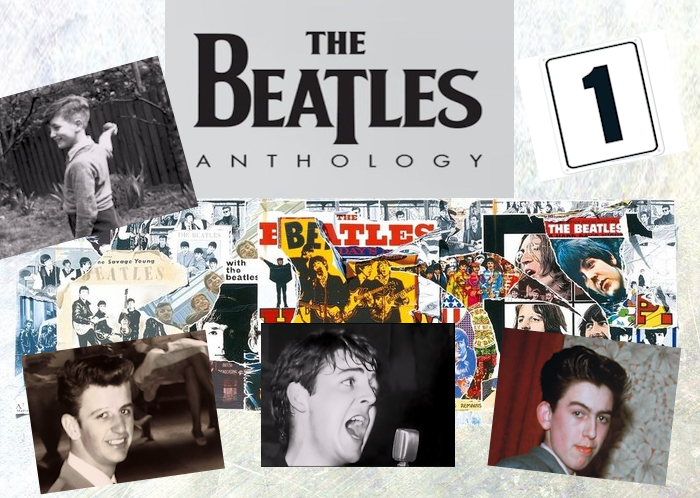
And so the story begins. As a kind of overture, “Anthology” opens with glimpses of The Beatles’ career accompanied by “In My Life” from “Rubber Soul,” with its evocative and moving mentions of “places I’ll remember, all my life,” and “people and things that went before.” Those words point to one key place and time: Liverpool in the early 1940s, the backdrop to the births of John, Paul, George and Ringo, and everything that formed them.
“My mother used to say that because I was born, the second World War started,” says Ringo, and all four Beatles take their first breaths in a city struggling though it’s some of its most difficult and tragic days. A little later, they are also hit by more personal ruptures and losses. Ringo spends much of his childhood in hospital, with peritonitis; as teenagers, John and Paul lose their mothers. But all four are also blessed by a huge social change that infuses their pre-fame period with a new sense of optimism: the end of Britain’s system of compulsory military service, which gives the country’s young people a real sense of freedom.
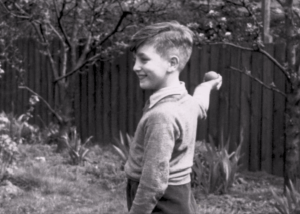
And then, with perfect timing, a cultural revolution arrives. “Rock’n’roll was real,” says John. “Everything else was unreal. It was the only thing to get through to me, out of all the things that were happening when I was 15.” Paul recalls his first glimpse of Elvis Presley: “He just looked perfect…the messiah had arrived.”
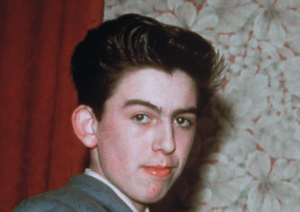
Via their shared interest in rock’n’roll and guitars, Paul befriends George, and then on July 6, 1957, he sees John playing at an outdoor event in suburban Liverpool, at which point The Beatles’ story decisively begins. They talk with real love about the inspiration provided by Elvis, Eddie Cochran, Little Richard, and in particular, Buddy Holly, who wrote his own songs, including “That’ll Be The Day,” one of the first two songs they record.
After they take their first collective musical steps in Liverpool, their big watershed happens in Hamburg, “right in the middle of the naughtiest city in the world” as George puts it. They now have a full-time drummer, Pete Best. Because they have to pay for eight or ten hours a night, their talent undergoes a huge transformation. It’s here that they also encounter Ringo—playing with his first band, Rory Storm and The Hurricanes. When he sits in with The Beatles, it feels as if everything is suddenly in place.
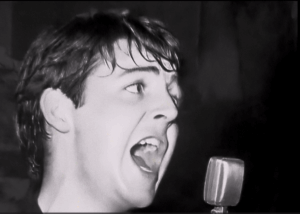
Back in Liverpool, their lifelong aide and confidante, Neil Aspinall, becomes their road manager and Brian Epstein takes charge. He persuades them to give up their beloved black leather and start wearing suits and sets about finally getting them a deal with a record company. “If he hadn’t gone around London on foot with tapes under his arm…we would never have made it,” says John.
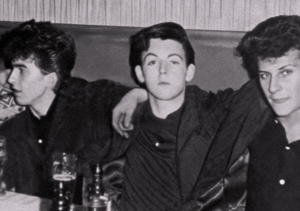
They sign to Parlophone and begin working with producer George Martin. Pete Best is replaced byRingo, which triggers the mini riot in which George gets a black eye. In February 1963, “Please PleaseMe” makes it to number one in the UK singles chart, and everything really commences.
🟠Would you like to support the page with a donation? Enter HERE
🟠We invite you to visit our NEW Facebook Page FOLLOW US HERE:
WELCOME! FOLLOW US! VISIT US HERE:
www.beatlesmagazine.com
https://www.facebook.com/BEATLESMAGAZINE1/
https://beatlesmagazine.blogspot.com/
https://beatlesmagazinebootleg.blogspot.com/
https://beatlesmagazinevideo.blogspot.com/
https://www.instagram.com/beatlesmagazine/
https://x.com/BEATLESMAGAZINE
https://www.tiktok.com/@beatlesmagazine
https://www.threads.net/@beatlesmagazine
🟠BEATLES STORES (Associated with Amazon, Shipments Worldwide)→ HERE , HERE & HERE
#USA 🇺🇸: https://amzn.to/3417JGy
#UK 🇬🇧: https://amzn.to/3qVcsDy
#JAPAN 🇯🇵 : https://amzn.to/3FbWKsO
#GERMANY 🇩🇪: https://amzn.to/3r6s5IB
#FRANCE 🇫🇷: https://amzn.to/3ty8zaX
#SPAIN 🇪🇸: https://amzn.to/3qfiS1s
👉Visit us : https://linktr.ee/BEATLESMAGAZINE
