
“Revolution 9” is a fascinating and controversial chapter in the history of The Beatles, representing John Lennon’s deepest foray into the world of avant-garde music. Here is a detailed account of its creation, influences, and production, based on reliable sources.
The idea for “Revolution 9” grew out of an extended version of the song “Revolution 1,” recorded during the “White Album” sessions in 1968. Originally, the end of that song stretched for over six minutes with a chaotic and cacophonous improvisation, which served as the basis for the final piece.
The main influence on Lennon was his relationship with Yoko Ono and the world of avant-garde art. Yoko introduced him to the works of composers like the German Karlheinz Stockhausen and the Frenchman Edgard Varèse, pioneers of musique concrète, a form of composition that uses recorded sounds from the real world as musical raw material. John was also familiar with the work of American composer John Cage, who explored the use of chance and silence in music. John Cage was an influential American composer known for experimental music, especially his use of chance operations (like rolling dice to compose music) and silence (as in his famous piece 4′33″). His ideas influenced many artists beyond classical music, including members of The Beatles. John stated that his intention was to create a “sound painting of a revolution,” capturing the violence and chaos of a social uprising.
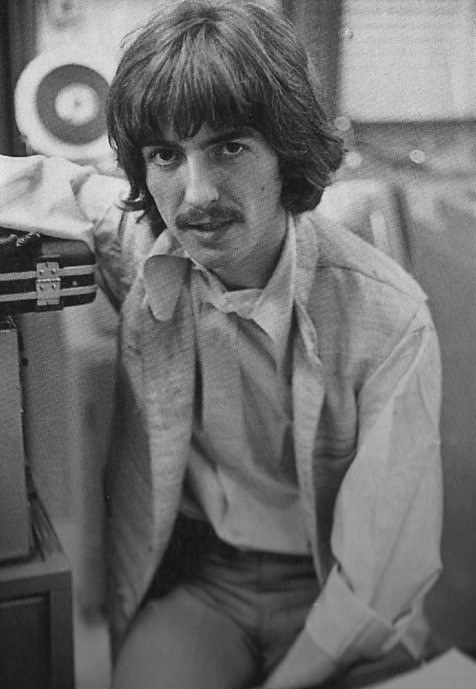
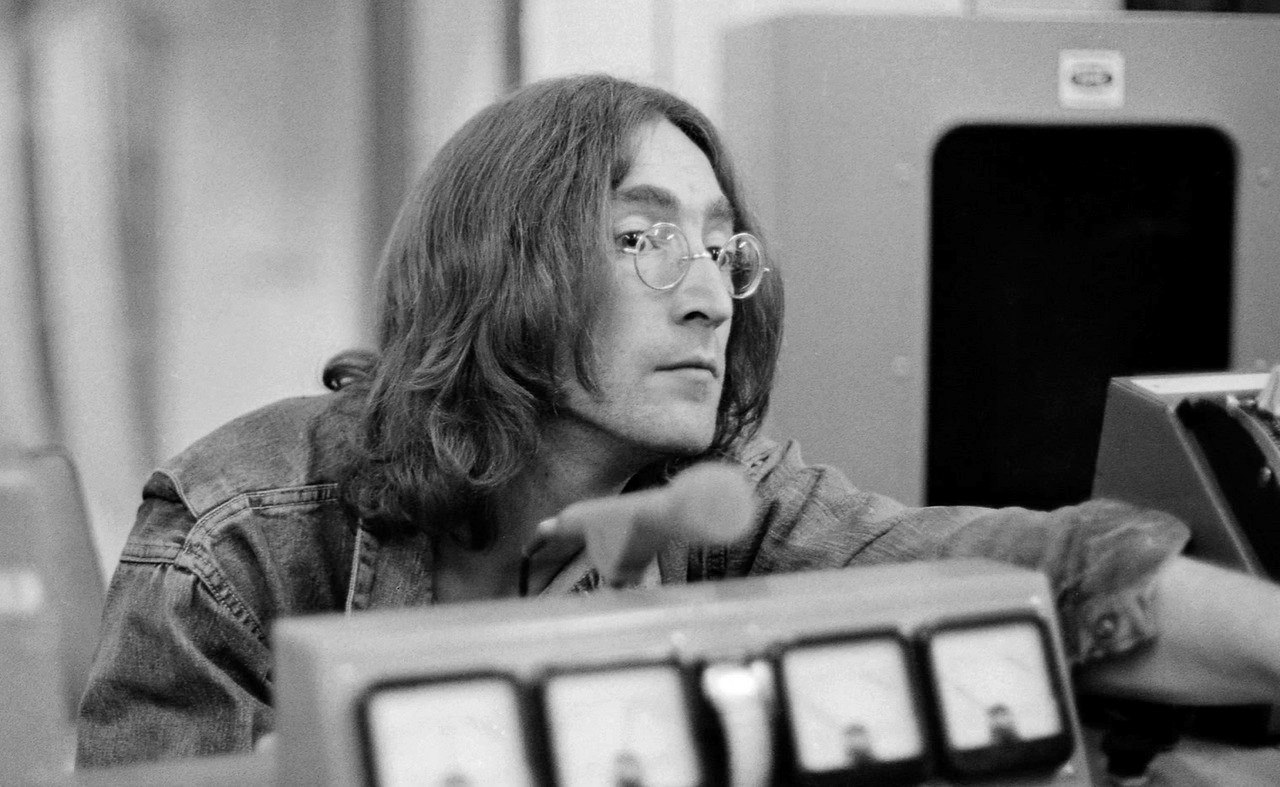
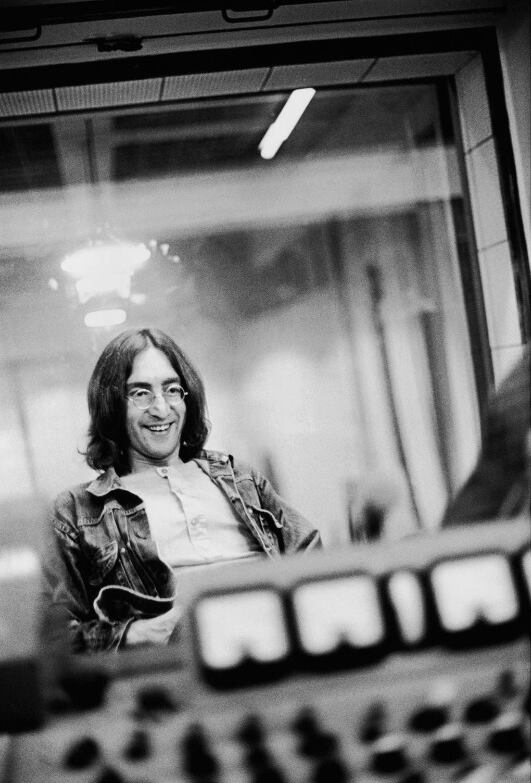
The recording sessions for “Revolution 9” took place at EMI Studios (later known as Abbey Road) in June 1968, primarily with John, Yoko, and George Harrison. Paul McCartney did not participate in the creation of this piece, and George Martin, the producer, expressed his dislike for the result, although it was one of the engineers, Geoff Emerick, who helped John assemble the piece.
Inspired by the last six minutes of “Revolution 1,” John Lennon, with the help of Geoff Emerick, manipulated the faders to create a nine-minute track. He raised and lowered different sounds until he achieved the desired effect.
The production was a sound collage process, where John and Yoko collected and mixed a large number of recordings:
- The phrase “Number nine”: The most iconic and recurring phrase comes from a test tape in the Abbey Road sound library, where an engineer repeated it over and over. It is said to have been a voice for audition tests at the Royal Academy of Music.
- Reversed orchestrations: Parts of the orchestral recordings from “A Day in the Life” on the Sgt. Pepper’s Lonely Hearts Club Band album and works by composers like Sibelius and Beethoven were used, which were played backwards to create an ethereal and unsettling effect.
- Real-life sounds: The piece included recordings from the EMI sound effects library, such as explosions, a woman’s screams, a baby’s cry, a crowd chanting “Right! Right! Right!” and fragments of an American football game.
- Voices and dialogue fragments: You can hear phrases from Lennon and Yoko, such as “If you become naked…”, “The watusi”, and “The twist”. The collage also incorporates a fragment of producer George Martin saying “Geoff, put the red light on.”
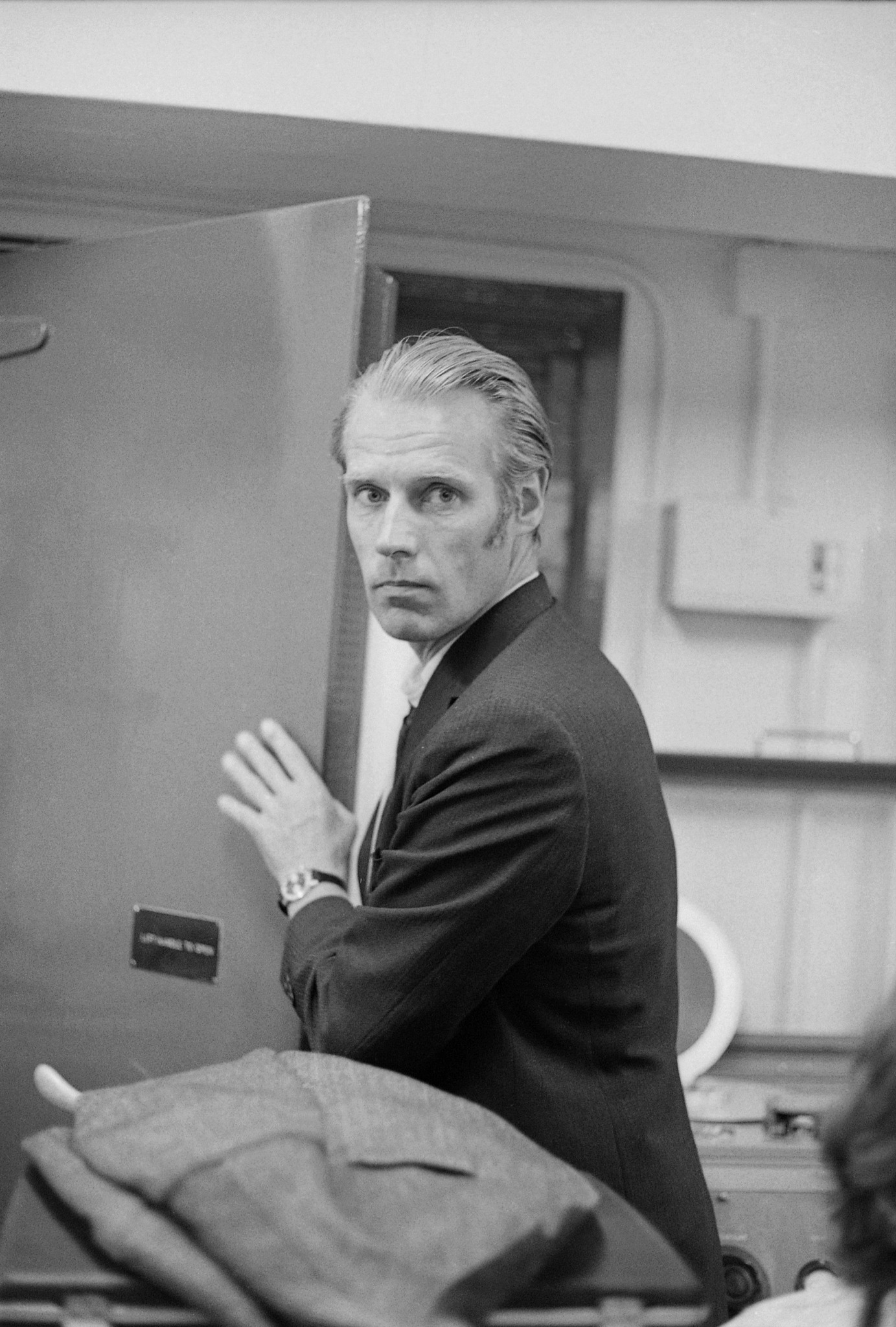
The process involved John, Yoko, and the engineers playing multiple tapes on different recorders, manipulating and mixing them live to create the piece. Since digital samplers did not exist, this was a manual and physically demanding process.
“Revolution 9” is the longest track in The Beatles’ official discography. Its inclusion on the “White Album” was a point of friction with Paul McCartney and producer George Martin, who thought it was too experimental for a pop record. Despite this, John stood firm in his decision, considering it an important work of art.
The song generated highly polarized reactions. While many critics condemned it as meaningless chaos, others praised it as one of the most influential avant-garde pieces in history, as it brought the genre to a massive audience. Music critic Ian MacDonald, in his book “Revolution in the Head,” called it “one of the most culturally significant acts the Beatles ever perpetrated,” as it was the “most widely distributed avant-garde artifact in the world.”
Over time, “Revolution 9” has become a key piece for understanding John Lennon’s evolution as an artist, his growing interest in experimentation, and his relationship with Yoko Ono. It has also become a source of speculation for the “Paul is dead” theory, with fans claiming to hear the phrase “Turn me on, dead man” in the backwards recording of “Number nine.” However, these interpretations are widely considered to be coincidences or misinterpretations.
🟠Would you like to support the page with a donation? Enter HERE 
🟠We invite you to visit our NEW Facebook Page FOLLOW US HERE:
WELCOME! FOLLOW US! VISIT US HERE:
www.beatlesmagazine.com
https://www.facebook.com/BEATLESMAGAZINE1/
https://beatlesmagazine.blogspot.com/
https://beatlesmagazinebootleg.blogspot.com/
https://beatlesmagazinevideo.blogspot.com/
https://www.instagram.com/beatlesmagazine/
https://x.com/BEATLESMAGAZINE
https://www.tiktok.com/@beatlesmagazine
https://www.threads.net/@beatlesmagazine
🟠BEATLES STORES (Associated with Amazon, Shipments Worldwide)→ HERE , HERE & HERE
#USA 🇺🇸: https://amzn.to/3417JGy
#UK 🇬🇧: https://amzn.to/3qVcsDy
#JAPAN 🇯🇵 : https://amzn.to/3FbWKsO
#GERMANY 🇩🇪: https://amzn.to/3r6s5IB
#FRANCE 🇫🇷: https://amzn.to/3ty8zaX
#SPAIN 🇪🇸: https://amzn.to/3qfiS1s
👉Visit us : https://linktr.ee/BEATLESMAGAZINE
