
On August 5, 1966, The Beatles released their seventh studio album in the United Kingdom: Revolver. Six decades after its release, this work is unanimously considered by specialized critics and music historians as one of the most pivotal, influential, and avant-garde masterpieces in popular music history. Far from traditional Beatlemania, the record marked the definitive turning point where the Liverpool quartet transformed from teen idols into true pioneers of studio experimentation.
Recorded at London‘s EMI Studios between April and June 1966 under the guidance of producer George Martin, Revolver was born at a crucial moment. The band had made the decision to retire from live touring—making this album their final project before permanently leaving the stage—which freed John Lennon, Paul McCartney, George Harrison, and Ringo Starr from the pressure of having to reproduce their songs in a live setting. This creative freedom paved the way for an unprecedented display of innovative studio techniques.
From the opening sharp fiscal critique by George Harrison on “Taxman“, to the hypnotic and psychedelic closer “Tomorrow Never Knows“—a pioneering track featuring tape loops, lyrics inspired by The Tibetan Book of the Dead, and electronically treated vocals—the album explored textures and sonic universes previously unheard of in mainstream music.
The tracklist shone for its formal and thematic eclecticism. Paul McCartney contributed the heartbreaking melancholy of “Eleanor Rigby”—backed solely by a classical string octet—and the sophisticated pop of “Here, There and Everywhere”. Meanwhile, John Lennon captured an introspective, psychedelic surrealism in masterpieces like “I’m Only Sleeping“ (famous for featuring some of the first backward guitar recordings in rock history) and “She Said She Said”. Harrison, establishing himself as a formidable songwriter, brought a deep exploration of Indian music through the use of the sitar on “Love You To“.
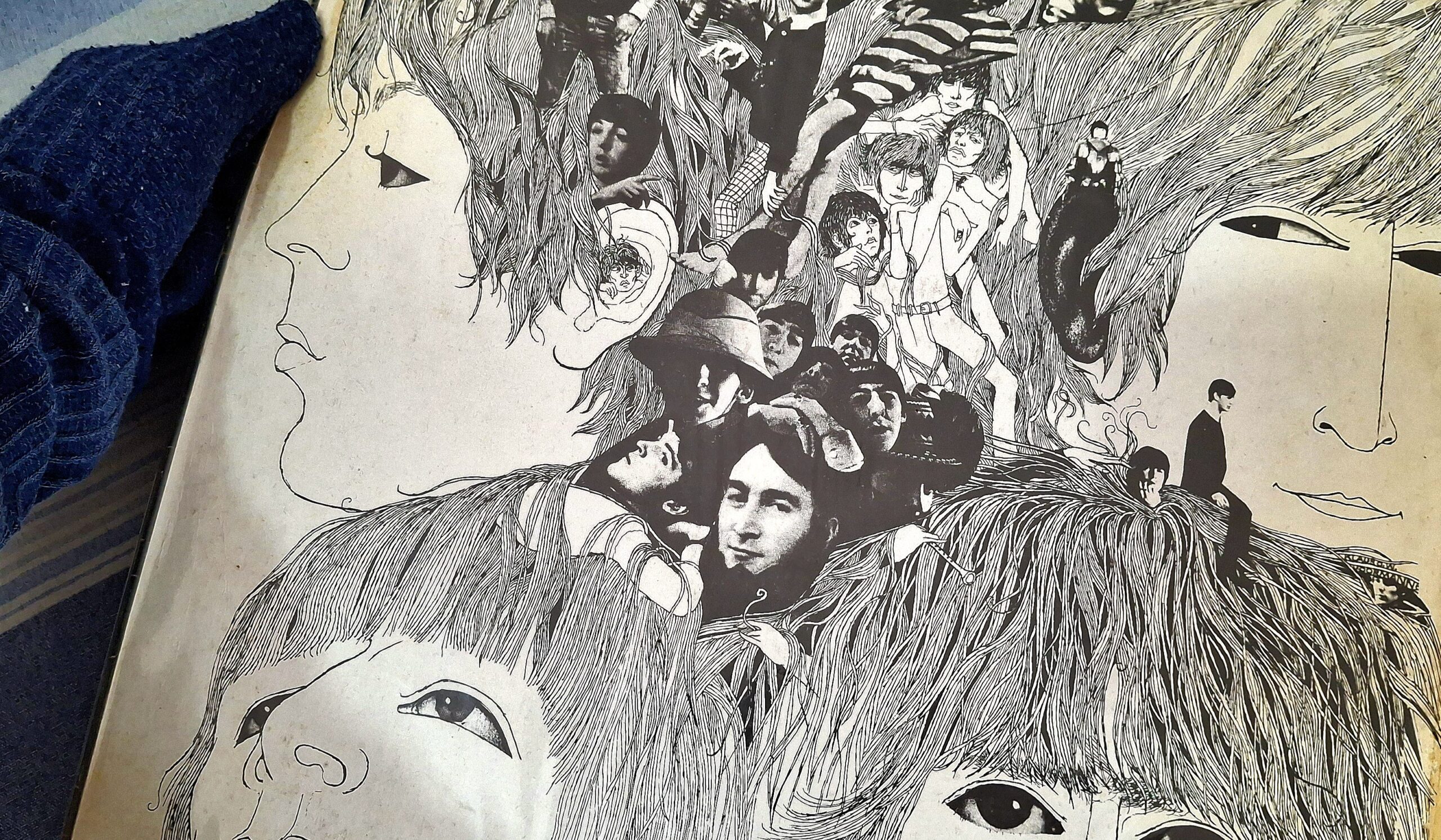
Additionally, the album cover art, designed by their friend and German artist Klaus Voormann, combined clean-line illustrations with a photographic collage that reinforced the group’s aesthetic break.
Sixty years after its market debut, Revolver continues to fascinate new generations. Not only did it lay the conceptual groundwork for the psychedelic explosion that would arrive a year later with Sgt. Pepper’s Lonely Hearts Club Band, but it also proved that the recording studio could be used as a musical instrument in its own right, forever redefining the creative boundaries of rock and modern pop.
……………………………………………………
🟠Would you like to support the page with a donation? Enter HERE
 Join the Beatles Subscriber Zone here:
🟠We invite WELCOME! FOLLOW US! VISIT US HERE:
www.beatlesmagazine.com
https://www.facebook.com/BEATLESMAGAZINE1/
https://beatlesmagazine.blogspot.com/
https://beatlesmagazinebootleg.blogspot.com/
https://beatlesmagazinevideo.blogspot.com/
https://www.instagram.com/beatlesmagazine/
https://x.com/BEATLESMAGAZINE
https://www.tiktok.com/@beatlesmagazine
https://www.threads.net/@beatlesmagazine
🟠BEATLES STORES (Associated with Amazon, Shipments Worldwide)→ HERE , HERE & HERE
🟠VISIT PAUL McCARTNEY’s OFFICIAL AMAZON STORE: https://amzn.to/4r3DN4w
#USA 🇺🇸: https://amzn.to/3417JGy
#UK 🇬🇧: https://amzn.to/3qVcsDy
#JAPAN 🇯🇵 : https://amzn.to/3FbWKsO
#GERMANY 🇩🇪: https://amzn.to/3r6s5IB
#FRANCE 🇫🇷: https://amzn.to/3ty8zaX
#SPAIN 🇪🇸: https://amzn.to/3qfiS1s
👉Visit us : https://linktr.ee/BEATLESMAGAZINE
